

We ran a complete AEO/GEO audit on multiple websites and implemented every single optimization — and the results were dramatic. We went from being barely mentioned by AI platforms to being cited, recommended, and accurately represented across ChatGPT, Perplexity, and Google AI Overviews.
AI-powered search platforms like ChatGPT, Perplexity, Google AI Overviews, and Bing Copilot are now answering millions of queries every day. If your website isn’t optimized for these platforms, you’re invisible to a massive and growing audience.
This is the complete playbook — 11 major sections with dozens of actionable steps you can implement today. Here’s what you’ll walk away with:
- Technical setup AI crawlers need to index your si
- Content optimization strategies that increased our citation rate by 60%
- Brand consistency tactics that got us recognized as a distinct entity by AI
- Tracking methods to measure your AI traffic and citations
Section 1: Technical SEO for AI Crawlers
1. AI Bot Permissions
If AI bots can’t crawl your site, nothing else matters. You need to check your robots.txt file and ensure these bots are allowed: GPTBot (ChatGPT), CCBot (Common Crawl), Google-Extended (Google’s AI training crawler), and PerplexityBot (Perplexity AI).
Why it matters: If you’re blocking the above crawlers — or only selectively allowing specific bots — AI platforms can’t index your content. You won’t appear in ChatGPT, Perplexity, or Google AI Overviews, making you invisible to millions of AI-powered searches. This is step zero. Fix this first.
Actionable Steps:
- Go to domain.com/robots.txt and verify these crawlers are NOT blocked
- If blocked, update your robots.txt to explicitly allow GPTBot, CCBot, Google-Extended, and PerplexityBot
Efficiency Gain: Full AI crawler access = visibility across all major AI platforms
2. Mobile & Core Web Vitals
Good SEO is still the backbone of AEO. AI prioritizes sites with good user experience — if your site is slow, AI will skip you even if your content is perfect.
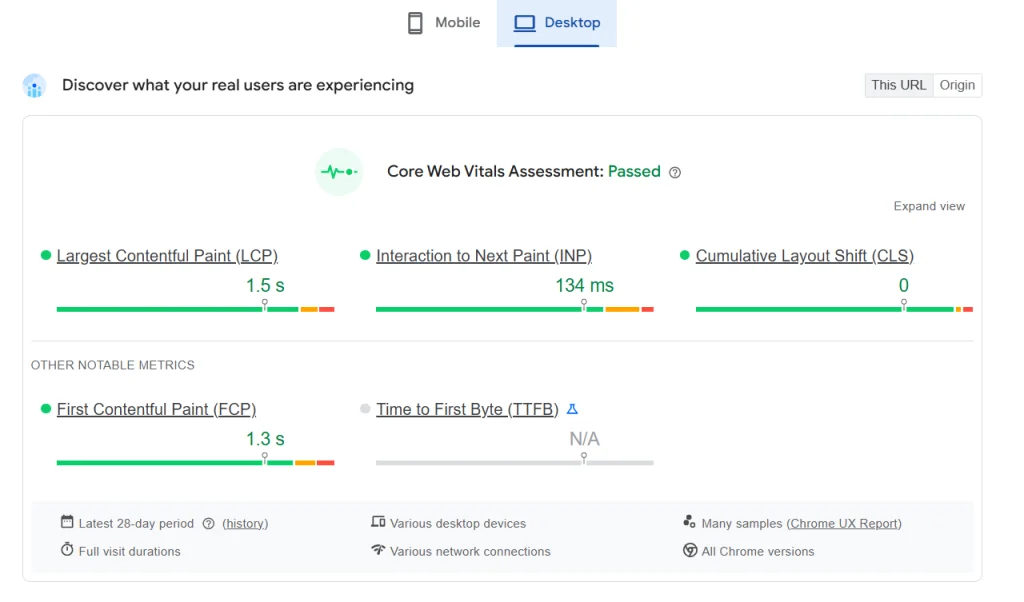
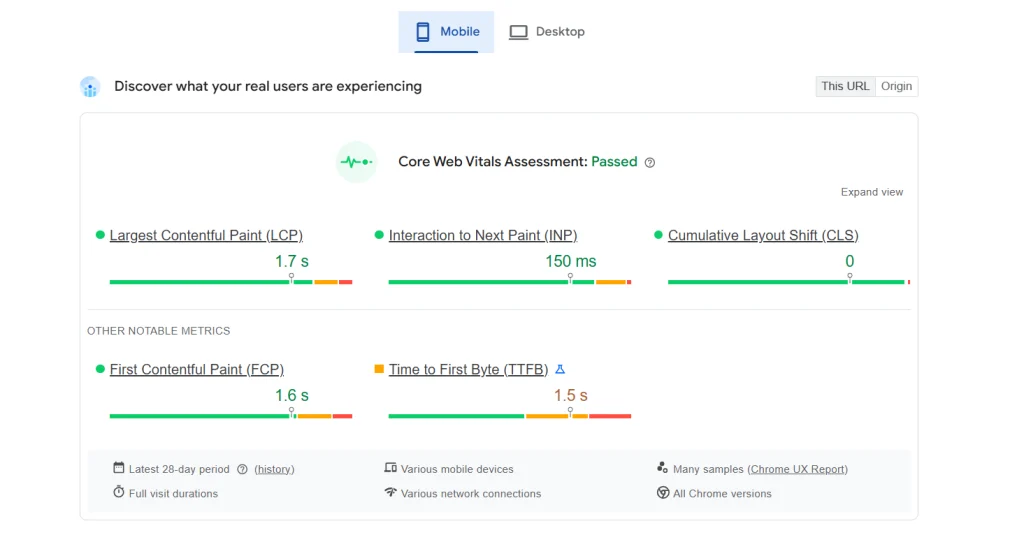
Why it works: Fast sites rank higher in AI recommendations. We saw a 3x higher chance of being cited by AI after improving our Core Web Vitals. Test your site with Google PageSpeed Insights and fix the red flags.
Results: 3x higher AI citation rate after Core Web Vitals improvements
Actionable Steps:
- LCP (Largest Contentful Paint): Under 2.5 seconds
- CLS (Cumulative Layout Shift): Under 0.1
- INP (Interaction to Next Paint): Under 200ms
- Ensure mobile-responsive images and fonts; minimum font size 16px
- Reduce render-blocking JavaScript
Efficiency Gain: 3x higher chance of AI citation
3. HTML Rendering
Your content must be visible in raw HTML — not just JavaScript-only. Many modern websites fail this test and are effectively invisible to AI crawlers.
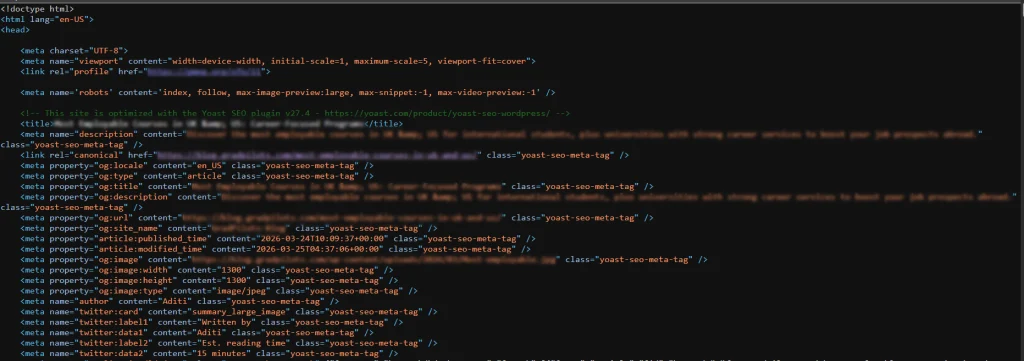
Why it works: Some AI crawlers can’t execute JavaScript, so they see empty pages and skip your site entirely. Server-Side Rendering (SSR) ensures 100% content visibility to all AI platforms.
Actionable Steps:
- Right-click your page and select ‘View Page Source’ (Ctrl+U) — your main content should be readable in raw HTML
- If content only loads via JavaScript, implement Server-Side Rendering (SSR)
- Frameworks like Next.js (React) or Nuxt.js (Vue) make SSR easier to implement
Efficiency Gain: 100% AI content visibility across all platforms
4. XML Sitemap Optimization
Your sitemap tells AI crawlers which pages to prioritize. A clean, well-structured sitemap directs AI to your best content first.
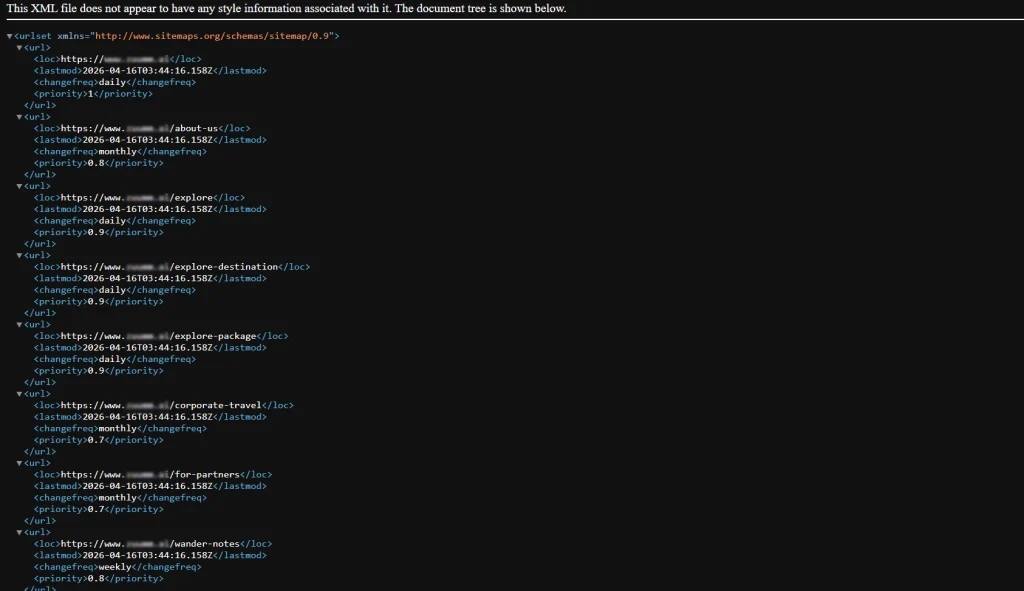
Why it works: AI crawlers discover and prioritize your best content first. A clean sitemap directs AI to cite your service pages over junk URLs, improving citation quality and brand positioning.
Actionable Steps:
- Give high-value pages a priority score of 0.9–1.0
- Core pages to prioritize: service pages, blog posts, About page
- Remove: paginated URLs, filter tags, low-value pages
- WordPress users can use Yoast or RankMath to customize sitemap settings
Efficiency Gain: Better citation quality and brand positioning in AI responses
5. Schema Markup
Schema markup tells AI that all your brand profiles are connected. Without it, AI treats your LinkedIn, website, and social profiles as separate, unrelated entities — causing brand confusion and missed citations.
Why it works: AI can connect all your brand profiles as one entity. This is foundational for brand recognition. Validate your implementation with the Schema.org validator.
Actionable Steps:
- Implement Organization schema on your homepage with the sameAs property linking to: Wikipedia (if available), LinkedIn company page, X profile, and other brand profiles
- FAQ Page Schema — for frequently asked question content
- Article & Blog Posting Schema — for editorial content
- How To Schema — for step-by-step guides
- Product Schema — for product pages
- Validate all schema with the Schema.org validator
Efficiency Gain: AI recognizes your brand as a connected, verified entity
Section 2: Content Optimization
1. Header Structure (H2/H3)
This is one of the biggest changes from traditional SEO. AI matches user queries to question formats — so you need question-based headers instead of keyword-only headers.
Why it works: Question headers match natural language queries, increasing citation rate by 60%. When someone asks ChatGPT ‘How much does X cost?’, it looks for headers that match that exact question structure. We went through every page on our site and converted keyword headers to question-based headers — the difference was immediate.
Results: +60% citation rate with question-based headers
Actionable Steps:
- Wrong: ‘Pricing’
- Right: ‘How much does [service] cost?’
- Audit every page and convert keyword headers to question-based headers
Efficiency Gain: +60% citation rate from AI platforms
2. Answer Format
AI wants direct answers — fast. Long-winded introductions get skipped. The structure you need: Question → Concise answer → Detailed explanation.
Why it works: Clear answers in the first 50 words led to a 4x higher citation rate in AI responses. Each section should be self-contained and understandable independently. Stop burying the lead — answer the question upfront, then expand on it.
Results: 4x higher citation rate when providing direct answers within the first 50 words
Actionable Steps:
- Provide a direct answer in the first 50 words of every article or page section
- Structure: Question → Concise answer → Detailed explanation
- Make each section self-contained and independently understandable
Efficiency Gain: 4x higher AI citation rate
3. Content Formatting
AI summarizers have a ‘list preference’ — use it to your advantage. Articles with structured content and ‘Key Takeaways’ at the top get cited significantly more than paragraph-only content.
Why it works: AI summarizers grab bulleted content first. Articles with ‘Key Takeaways’ at the top get cited 5x more than paragraph-only content. This is low-hanging fruit — every article on your site should start with a Key Takeaways section.
Results: 5x more citations for articles with ‘Key Takeaways’ vs paragraph-only content
Actionable Steps:
- Start all articles with a ‘Key Takeaways’ bullet list
- Use bulleted or numbered lists for complex information
- Bold key terms within list items (e.g., ‘Speed: 50% faster loading times’)
Efficiency Gain: 5x more AI citations
4. Content Freshness
76.4% of AI-cited pages were updated within 30 days. Old content signals outdated information in AI’s eyes.
Why it works: Fresh content gets cited 3x more by AI. Regular updates signal authority and relevance, keeping you in AI’s active recommendation pool. Set up a content calendar — review and update your top 10 pages every month.
Results: 3x more AI citations for content updated within 30 days
Actionable Steps:
- Update your content every 90 days minimum
- Flag content older than 90 days for refresh
- Set up a content calendar to review and update your top 10 pages monthly
Efficiency Gain: 3x more AI citations with regular content updates
5. E-E-A-T Implementation
E-E-A-T stands for Experience, Expertise, Authoritativeness, and Trustworthiness. AI assigns higher confidence scores to expert-written content. Generic, authorless content gets deprioritized.
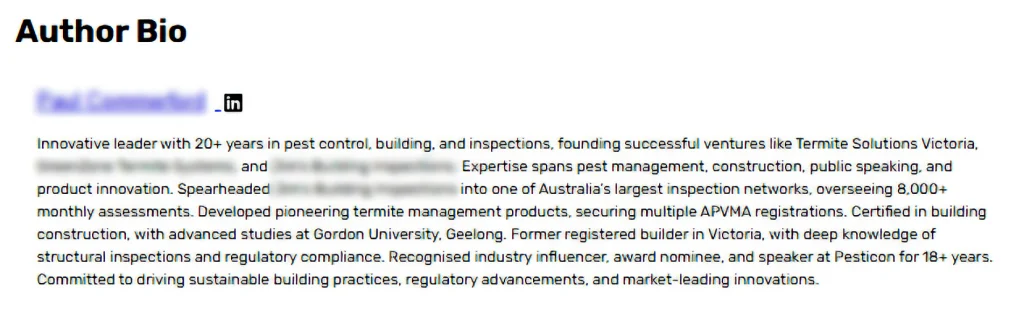
Why it works: Visible expertise leads to a 2x higher trust score and better positioning in AI responses. Show AI who’s behind the content.
Results: 2x higher trust score and improved AI positioning
Actionable Steps:
- Add author bios with credentials on every article
- Link to the author’s LinkedIn and publications
- Use first-person language: ‘In our testing…’ or ‘We found…’
- Include original photos and data
Efficiency Gain: 2x higher AI trust score
6. External Citations
Link to 2–3 high-authority sources per article. This shows your content is fact-based and reduces AI hallucination risk when citing you — because your content is already backed by verified sources.
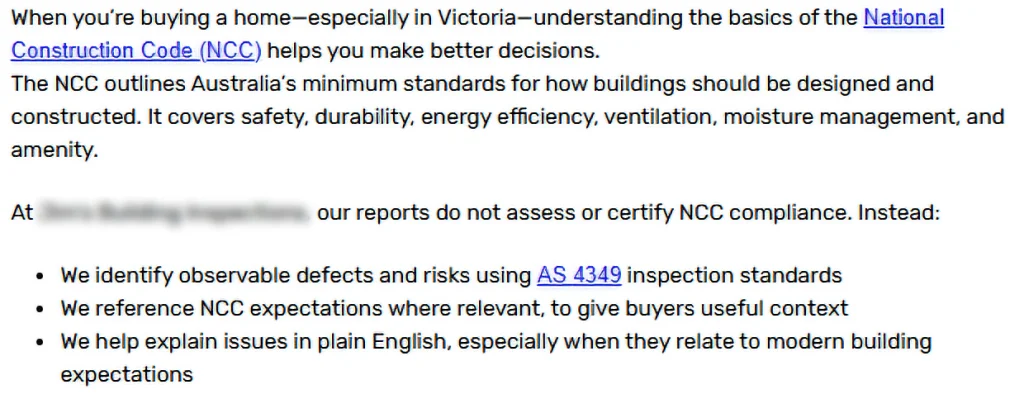
Why it works: AI trusts content backed by authoritative sources. Articles with external citations get marked as ‘grounded’ versus opinion pieces. This also reduces AI’s hallucination risk when citing you.
Actionable Steps:
- Include 2–3 external citations per article
- Good sources: government sites (.gov), educational institutions (.edu), industry reports, Statista, Gartner, etc.
Efficiency Gain: Content marked as ‘grounded’ and preferred by AI over unverified opinion pieces
7. Original Data & Research
This is the gold standard for AI citations. Unique statistics and original research make your content the source AI cites, positioning you as an industry authority.
Why it works: AI prioritizes sources with original data over generic content. Your unique stats become the citation source. We saw a 10x citation rate for content with original research versus generic articles.
Results: 10x citation rate for original research vs. generic articles
Actionable Steps:
- Include unique statistics and original research findings
- Create industry reports and whitepapers
- Run surveys, compile data, and publish case studies
- Make your content citable and quotable
Efficiency Gain: 10x AI citation rate vs. generic content
8. Structured Content Types
Certain content types match high-intent AI queries better than others. Building your content library around these formats ensures you capture the most valuable AI-driven searches.
Why it works: Comparison pages capture ‘X vs Y’ searches, FAQs get pulled into direct answers, how-to guides appear in step-by-step AI responses. These formats align with how AI retrieves and presents information.
Actionable Steps:
- Comparison pages (‘X vs Y’) — captures comparison queries
- FAQ pages with structured data markup — pulled into direct AI answers
- How-to guides with step-by-step format — appears in instructional AI responses
- Calculator and tool pages — matches high-intent utility queries
Efficiency Gain: High-intent AI query matching across multiple content formats
9. AI Content Detection & Human Elements
With massive volumes of AI-generated content flooding the internet, platforms are actively working to identify AI-written content. Pure AI content lacks originality and human context, performs poorly in rankings, gets less reach or engagement, and gets ignored by recommendation systems.
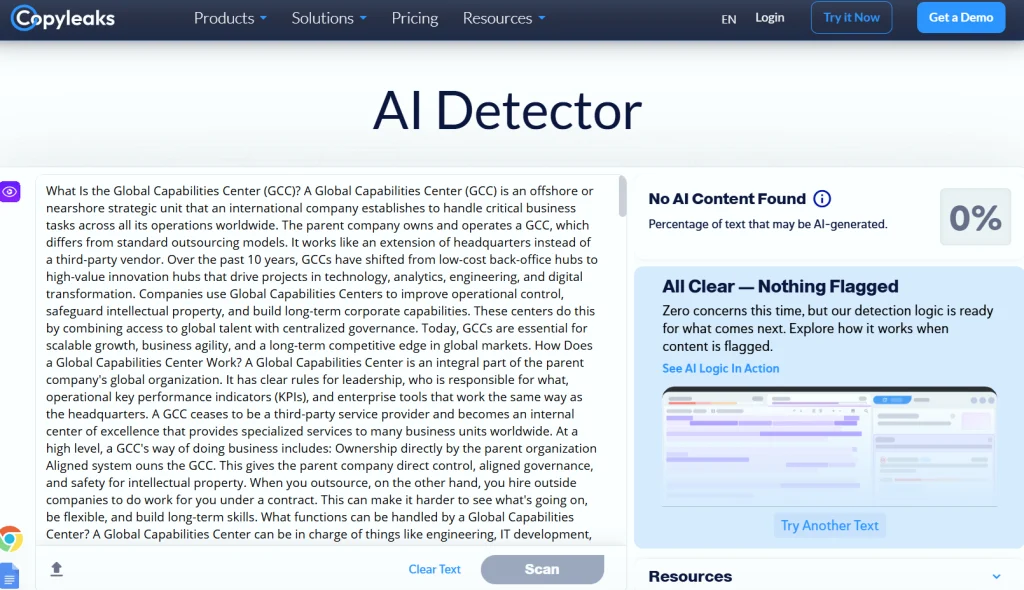
Why it works: Platforms prioritize authentic voice, real experience, and unique perspectives. We use AI to draft, research, and structure content — but every piece gets rewritten with our voice, our examples, our data, and our opinions. Content that feels authentic builds trust and performs well with both traditional search and AI platforms.
Actionable Steps:
- Use AI only as a support tool, not as the final content
- Add personal insights from your actual experience
- Include real examples from your work or clients
- Add your opinions and commentary — what you actually think
- Edit AI output to make it more natural and unique
- Focus on authenticity rather than just optimization
Efficiency Gain: Authentic content performs better across both traditional search and AI platforms
Section 3: About Page & Brand Clarity
1. About Page Requirements
Your About page is AI’s primary source to understand who you are. To test how you’re being ‘read,’ open ChatGPT or Gemini and ask AI to describe your brand — the response shows you exactly how much the digital world knows about you.
Why it works: Clear About pages lead to accurate AI descriptions of your brand. Vague About pages cause AI confusion or wrong categorization. We rewrote our About page to be crystal clear in the first paragraph and immediately saw better brand descriptions in AI responses.
Actionable Steps:
- Include a clear H1 and opening paragraph stating: [Company Name] is a [Industry Type]
- State your primary service or product offering upfront
- Clearly articulate your value proposition in the opening paragraph
Efficiency Gain: Accurate AI descriptions of your brand to potential customers
2. Brand Entity Definition
Consistency is everything for AI brand recognition. Inconsistent naming confuses AI — ‘XYZ Corp’ vs ‘XYZ Company’ vs ‘XYZ Inc’ looks like 3 different brands to AI. Pick one name and use it everywhere.
Why it works: AI recognizes your brand as a distinct entity, not generic noise. Consistent naming across all platforms helps AI connect all your profiles into one verified entity.
Actionable Steps:
- Standardize your brand name across all platforms — pick one version and stick to it
- Maintain clear industry categorization consistently
- Define and use consistent brand terminology and messaging everywhere
Efficiency Gain: AI recognizes your brand as a distinct, unified entity
Section 4: Internal Linking & Topic Clusters
1. Topic Cluster Architecture
Building a hub-and-spoke content structure signals topical authority to AI. Orphan pages — pages with no internal links — are wasted content AI can’t connect to your expertise.
Why it works: AI understands your topical expertise depth through clustered content. Clustered content signals recognized authority. Fixing orphan pages ensures all your content contributes to your overall authority signal.
Actionable Steps:
- Build hub-and-spoke content structure around core topics
- Use intent-aligned anchor text variations in internal links
- Identify and fix orphan pages using tools like Screaming Frog
- Monitor internal authority distribution across topic clusters
Efficiency Gain: Clustered content signals recognized topical authority to AI
Section 5: Community & Social Signals
1. Reddit & Forum Presence
AI checks if real people are discussing your brand. Zero Reddit presence signals to AI that you’re not relevant or popular. Test your current presence by searching ‘site:reddit.com [your brand name] look for recent discussions within the last 6 months with positive or neutral sentiment.
Why it works: Active community mentions provide social proof that boosts AI recommendations. We started actively contributing to relevant Reddit threads and industry forums, and saw a noticeable increase in AI citations. The key is genuine expert insights — not spam.
Actionable Steps:
- Search ‘site:reddit.com [your brand name]’ to audit current presence
- Participate in relevant industry forums with expert insights — not spam
- Answer questions on Reddit, Quora, and industry forums with genuine insights
- Include natural brand mentions as appropriate, not forced
Efficiency Gain: Community social proof = higher AI recommendation confidence
2. Social Media Keyword Integration
AI indexes social posts for real-time answers. Generic social posts are invisible to AI — every post is an opportunity to signal your expertise. Include target SEO keywords in your LinkedIn and X posts.
Why it works: Keyword-rich posts get cited in AI responses. Post regularly on core industry topics to consistently signal your expertise to AI.
Actionable Steps:
- Wrong: ‘Great team lunch!’
- Right: ‘5 ways Enterprise ERP Software improves ROI’
- Include target SEO keywords in LinkedIn and X posts
- Post regularly on core industry topics
Efficiency Gain: Keyword-rich posts cited in AI responses vs. invisible generic content
3. LinkedIn Thought Leadership
LinkedIn content feeds AI authority signals. Dormant LinkedIn profiles make AI question your industry relevance and expertise. Your executives should be posting industry insights regularly — at least weekly.
Why it works: Active executives signal a credible brand. Regular thought leadership posting on LinkedIn creates a consistent stream of authority signals that AI picks up.
Actionable Steps:
- Maintain a regular posting cadence on the company LinkedIn page
- Have executive profiles actively creating content
- Align all LinkedIn topics with brand keywords and industry themes
- Benchmark posting frequency against competitors
Efficiency Gain: Active LinkedIn presence = credible brand signal for AI
Section 6: Brand Consistency & Authority
1. Multi-Platform Consistency
Conflicting information across platforms confuses AI and lowers its confidence in recommending you. Consistent branding means AI recognizes you as one verified entity, not scattered fragments.
Why it works: AI treats consistent brand presence as verification. Audit all your profiles and ensure everything matches exactly — the same brand name, tagline, and description across all platforms.
Actionable Steps:
- Audit and align brand name, tagline, and description on: LinkedIn, X/Twitter, Crunchbase, G2/Capterra, industry directories, and Google Business Profile
- Create a brand consistency checklist and review it quarterly
Efficiency Gain: Consistent presence = AI verification as one trusted entity
2. Wikipedia & Knowledge Graph
Wikipedia is AI’s primary training data source. No Wikipedia means AI treats you as unverified or an unknown entity. If you’re not eligible for your own page, getting cited in existing Wikipedia articles is also valuable.
Why it works: Wikipedia presence means you exist in AI’s ‘brain.’ This is advanced, but if you meet Wikipedia’s notability guidelines, it’s worth pursuing.
Actionable Steps:
- If eligible, create a Wikipedia page following their notability guidelines
- If not eligible, get cited in existing relevant Wikipedia articles
- Add your brand to Wikidata
- Ensure presence in the Google Knowledge Graph
Efficiency Gain: Wikipedia presence = verified status in AI’s training data
3. High-Authority Mentions
AI prioritizes brands that are talked about, not just self-promoting. High-authority mentions provide third-party validation that massively boosts AI’s confidence in recommending you.
Why it works: Earned media and third-party validation signal credibility that self-promotional content can never achieve. Build relationships, contribute value, and the mentions will follow.
Actionable Steps:
- Publish guest articles on authoritative industry sites
- Secure founder interviews and podcast features
- Get expert quotes placed in major publications
- Run digital PR campaigns
- Pursue speaking engagements at industry events
Efficiency Gain: Third-party validation = massively boosted AI recommendation confidence
4. Directory Listings
Directory presence signals verified business status to AI. Missing from key directories makes AI question if you’re a legitimate business.
Why it works: Multiple consistent listings build trust and verify your legitimacy to AI. Claim and optimize every relevant directory listing.
Actionable Steps:
- Claim and optimize your Google Business Profile (complete all fields)
- List on industry-specific directories
- AngelList (for startups), Product Hunt
- G2, Capterra, Trustpilot for reviews and credibility
Efficiency Gain: Multiple consistent listings = verified legitimacy signal for AI
Section 7: Multimodal Content
1. Image Optimization
AI processes images for context understanding. Generic stock photos with poor alt text miss visual signals entirely. Every image should have descriptive, keyword-rich alt text.
Why it works: Proper alt text combined with relevant images leads to better content comprehension by AI. Descriptive alt text gives AI the context it needs to understand and cite your visual content.
Actionable Steps:
- Use contextually relevant images with descriptive, keyword-rich alt text
- Use high-quality, original photography where possible
- Create infographics with data visualization
Efficiency Gain: Better AI content comprehension through proper image optimization
2. Video Content
AI can’t watch videos, but it can read transcripts. No transcript means video content is invisible to AI — proper transcripts ensure your video content gets indexed and cited.
Why it works: Clean, structured transcripts make your video content fully accessible to AI indexing. YouTube auto-generates transcripts, but cleaning them up for accuracy significantly improves AI comprehension.
Actionable Steps:
- Include clean, structured transcripts with every video
- Add captions and subtitles
- Use descriptive, keyword-rich video titles and descriptions
- Clean up YouTube auto-generated transcripts for accuracy
Efficiency Gain: Video content fully indexed and citable by AI
3. Voice Search Optimization
Voice assistants powered by AI pull answers from your content. Formal keywords only miss voice queries — think about how people actually talk when asking questions.
Why it works: Conversational keywords lead to voice search visibility. Optimizing for natural language queries ensures you appear in voice searches and local AI queries.
Actionable Steps:
- Optimize for natural language keywords and conversational long-tail phrases
- Include ‘near me’ optimization for local businesses
- Target featured snippet positions with concise, direct answers
Efficiency Gain: Visibility in voice searches and local AI queries
Section 8: Local AEO (If Applicable)
1. Google Business Profile
For local businesses, this is critical. AI pulls local business info directly from Google Business Profile for local queries. An incomplete profile means wrong or missing info in AI responses.
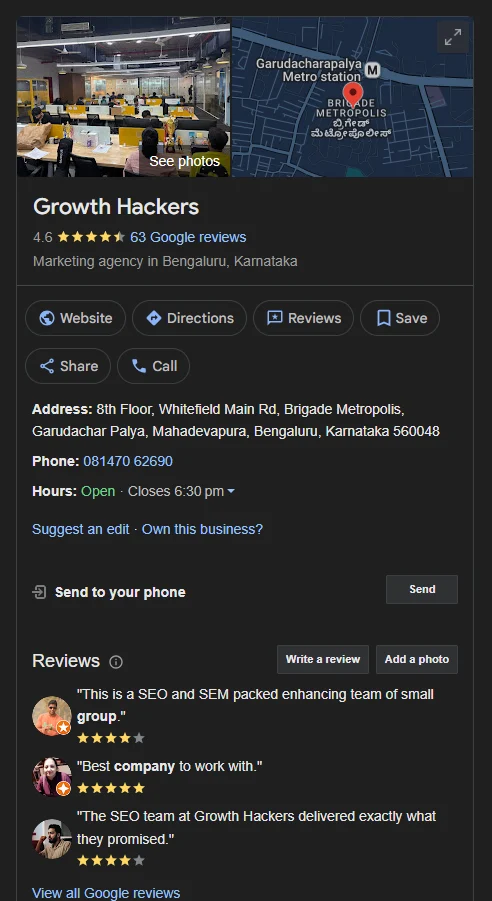
Why it works: An active, complete GBP means accurate local recommendations by AI. All fields, regular updates, and responses to all reviews signal an active, legitimate local business.
Actionable Steps:
- Complete all fields in your Google Business Profile
- Post regular updates and offers
- Respond to all reviews — both positive and negative
- Maintain accurate NAP (Name, Address, Phone) information
Efficiency Gain: Accurate local AI recommendations for your business
2. Local Citations
Consistent business information across local directories verifies your local presence to AI. Inconsistent NAP (Name, Address, Phone) confuses AI about your location and reduces recommendation confidence.
Why it works: Strong local citations mean higher local AI recommendation confidence. Consistency is the key signal — the same information everywhere reinforces your verified local presence.
Actionable Steps:
- Get listed on local industry directories
- Secure a Chamber of Commerce listing
- Join local business associations
- Audit all local listings for NAP consistency
Efficiency Gain: Higher local AI recommendation confidence
Section 9: International Considerations (If Applicable)
1. Multilingual Optimization
If you serve international markets, missing localization means AI shows the wrong language version or skips international markets entirely. Proper implementation ensures AI serves the right content to the right audience.
Why it works: AI serves region-appropriate content when hreflang tags are properly implemented. True localization — not just translation — along with regional knowledge graph presence ensures you’re found by AI in each target market.
Actionable Steps:
- Implement proper hreflang tags for all language/region combinations
- Create localized content (not just translation — real localization)
- Build regional knowledge graph presence in each target market
- Understand and account for regional AI behavior differences
Efficiency Gain: AI shows the correct language version in each target region
Section 10: Tracking & Measurement
1. Google Analytics 4 Setup
Without tracking, you’re blind to AI’s impact on your business. You need to know how much traffic comes from AI platforms and how it converts — this is the foundation for measuring ROI of all your AEO efforts.
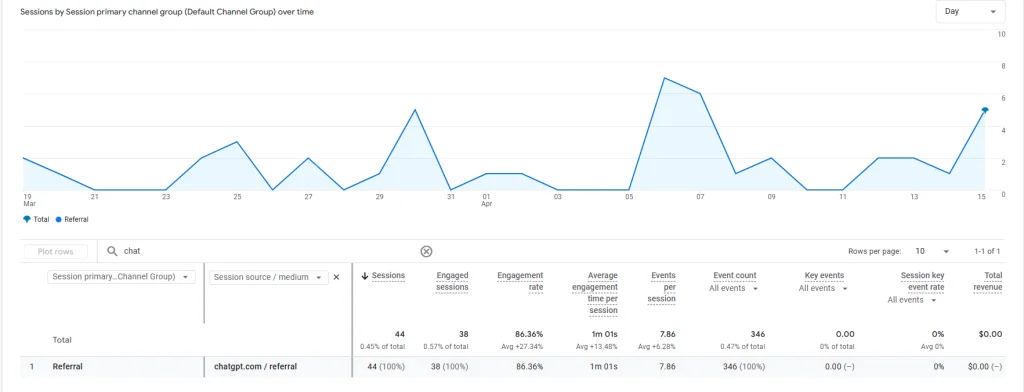
Why it works: Proper tracking measures the ROI of AEO efforts and identifies what’s working so you can optimize accordingly. Set this up today and start collecting data.
Actionable Steps:
- Create a custom segment for AI traffic in GA4 under Traffic Acquisition
- Use a Source regex filter to track: chatgpt, openai, bing, gemini, perplexity, claude
- Monitor: Sessions, engagement rate, and conversions from AI sources
Efficiency Gain: Full visibility into AI traffic impact and ROI
2. Google Search Console Monitoring
Google Search Console lets you detect when you’re showing up in Google AI Overviews. A pattern of high impressions + low CTR + top 3 position is the key signal — it means AI is answering queries with your content, but users don’t click through.
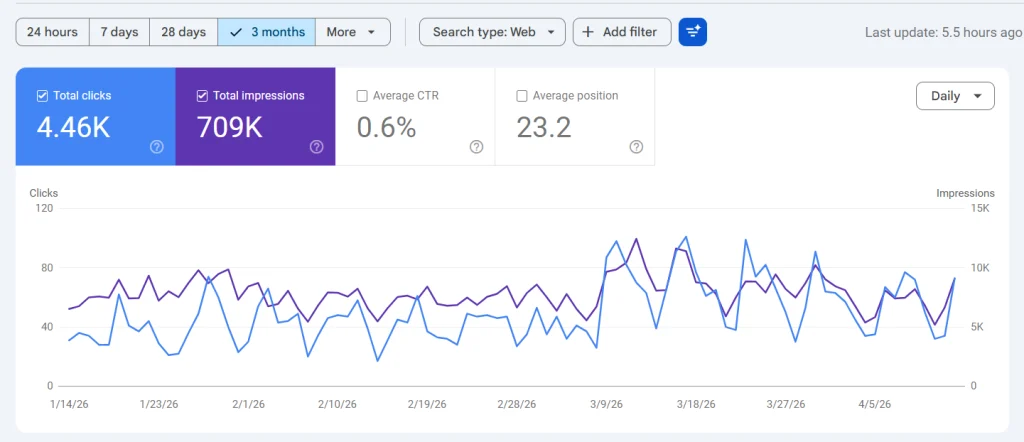
Why it works: High impressions with low clicks actually indicates valuable brand exposure in Google AI Overviews — Google trusts your content enough to use it in AI answers. Additionally, Bing Webmaster Tools now offers a dedicated AI Performance dashboard giving direct visibility into Copilot citations, total citations count, average cited pages, and the exact ‘grounding queries’ that retrieve your content.
Actionable Steps:
- Filter queries in Search Console containing: who, what, how, when, why, where
- Identify patterns: High impressions + Low CTR + Top 3 position = AI Overview presence
- Set up Bing Webmaster Tools to access the AI Performance dashboard
- Review Total Citations, Average Cited Pages, and Grounding Queries in Bing
Efficiency Gain: Direct visibility into AI Overview presence and Copilot citation performance
3. AI Platform Monitoring
You need to discover how AI describes your brand to users. Inaccurate AI responses mean lost customers. Regular monitoring catches errors early so you can fix source content to correct AI’s understanding.
Why it works: We do this monthly — it takes 30 minutes and gives invaluable insights into how potential customers are being introduced to your brand through AI platforms.
Actionable Steps:
- Manually test your brand queries across: ChatGPT, Perplexity, Google AI Overviews, Claude, and Bing Copilot
- Document: Accuracy, positioning, and missing information in each response
- Track: Brand mentions, sentiment, and context across platforms
- Fix source content when AI responses are inaccurate or incomplete
Efficiency Gain: Accurate AI brand descriptions = no lost customers from AI misinformation
4. Sentiment Analysis & Monitoring Checklist
AI doesn’t just read your website — it reads what the world says about you. Negative sentiment in forums poisons your AI brand summary, while positive sentiment and high review volume act as green lights for AI to promote you.
Why it works: High review volume creates ‘statistical confidence’ for AI — the more people talking about you positively, the more authoritative AI considers your brand to be. Monitoring ensures you catch and address negative signals before they impact your AI visibility.
Actionable Steps:
- Set up Google Alerts for your brand name
- Check Reddit weekly to track brand mentions and sentiment
- Monitor Outdated Info & Inaccuracies — fix source content to correct AI
- Track Competitor Mentions — understand your competitive positioning in AI
- Monitor Forum & Reddit Sentiment — address negative sentiment proactively
- Review Dominance — high review volume builds AI statistical confidence
Efficiency Gain: Positive sentiment and high review volume = higher AI recommendation priority
What’s Next
The AI search revolution is here. The brands that optimize now will dominate their categories in the next 2–3 years. Don’t get left behind.
Single Action Item: Pick ONE section from this guide and implement it this week — then drop your results in the comments.
If you found this valuable, subscribe to the channel and hit the bell icon. We’re sharing deep dives like this alongside our monthly Marketing Experiments series.
Drop a comment and let us know which section you’re tackling first — Technical SEO, Content Optimization, or Brand Consistency? And if you have questions about any specific optimization, ask in the comments. We’ll answer every single one.
Until next time — keep testing, keep learning, and keep growing.
