

Intro:
Welcome back to Episode 2 of Marketing Experiments That Actually Work. Last month, we shared insights from 100s of experiments across Meta Ads, SEO, and creative testing. The response was overwhelming and the experiments kept coming.
This month brought major platform shifts. Meta’s Andromeda update changed everything about audience targeting. Google’s AI automation crushed manual bidding strategies. And we discovered some surprising differences in how Instagram and YouTube handle the same content.
In this post, you’ll get:
• 4 platform-shifting experiments with quantified results you can replicate this week
• 5 strategic insights that will change how you approach modern marketing in 2025
• Advanced AI tools we’re using to stay ahead of the curve
Let’s dive into what worked this month.
🧪 Experiments That Delivered
1. Meta’s Andromeda Update: Broad Reach Beat Detailed Targeting
Meta rolled out something revolutionary this year called the Andromeda update and it’s fundamentally changed how Facebook and Instagram deliver ads.
Instead of narrow, persona-based audience targeting, Meta’s AI now matches ads to users based on creative signals (your images, videos, and copy) rather than predefined segments.
We ran a two-month test comparing traditional detailed targeting campaigns against Andromeda setups using broad audiences and diverse, persona-aligned creatives.
Results: Detailed targeting reached more people and generated more total purchases. But Andromeda campaigns achieved better cost efficiency: 25% lower CPC, 9.1% cheaper CPA, and 12.5% higher ROAS.

How to replicate:
• Simplify your campaign structure – use broad audiences instead of multiple persona-based ad sets
• Focus on diverse, high-quality creatives that speak to different user personas
• Let Meta’s AI optimize delivery and scale automatically
• Test with D2C brands first – B2B shows less effective outcomes
Efficiency Gain: +12.5% ROAS improvement through creative-driven targeting
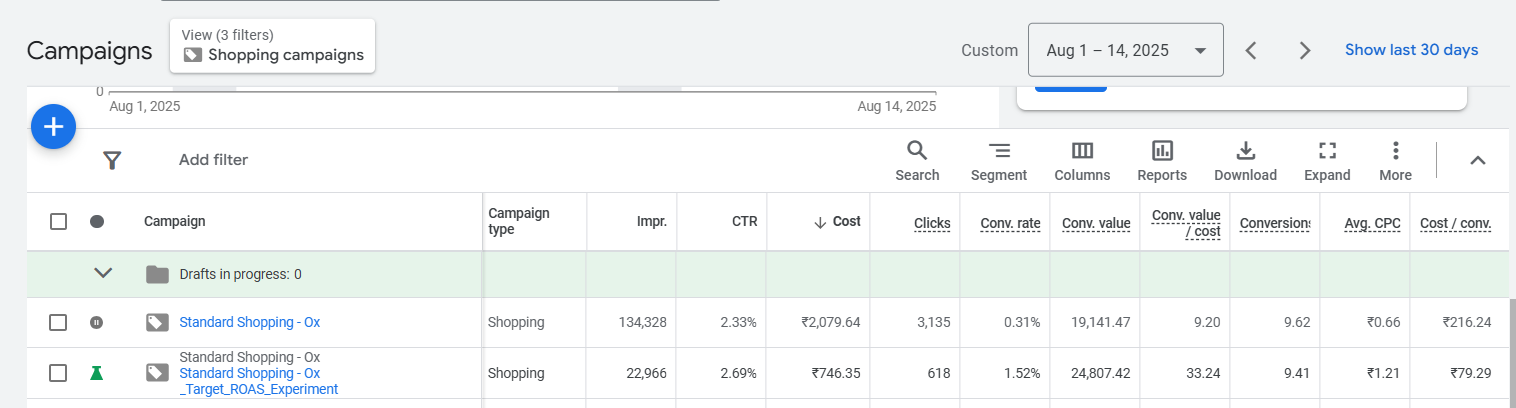
2. Automated Bidding Crushed Manual CPC on Google Ads
If you’re still manually setting bids in Google Ads, this experiment is for you.
We tested manual CPC against automated bidding strategies (Target CPA, Target ROAS, Maximize Conversions) across multiple campaigns.
Automated bidding won consistently. Google’s AI uses over 70 real-time auction signals to make smarter bidding decisions than manual optimization.
Yes, costs spike during the 2-3 week learning phase. But once stabilized: stronger long-term efficiency, higher ROAS, and dramatically less management effort.
How to transition:
• Start with Target CPA or Target ROAS
• Ensure accurate conversion tracking with 30-50 conversions per 30 days
• Allow 2-3 weeks for algorithm learning – don’t panic during initial cost spikes
• Monitor and adjust targets based on performance data
Key Insight: Let AI handle the micro-decisions while you focus on strategy.
3. Structuring Content for AI Search Results
SEO in 2025 isn’t just about ranking on Google, it’s about appearing in AI Overviews.
We restructured content pages to be more AI-friendly using this framework:
• Concise summaries: 50-70 words per topic/question
• Question-based headings: Clear, intent-driven structure
• Schema markup: HowTo and FAQ structured data
• Fact-dense content: Direct answers to user queries
Results: Pages started appearing in AI Overview results within weeks, driving higher traffic and better engagement than traditional, unstructured content.
Implementation steps:
• Break content into clear, question-based sections
• Write tight, fact-dense summaries (50-70 words max)
• Add HowTo or FAQ schema markup
• Focus on intent-aligned content that directly answers queries
Framework: Chunk content for AI consumption, not just human reading.
4. Instagram vs YouTube Shorts: Same Content, Different Outcomes
We posted identical short-form content on both Instagram Reels and YouTube Shorts to test platform behavior differences.
The results were completely different.
Instagram: Aggressive algorithm pigeonholed content into narrow niches. Reach spiked initially, then died quickly.
YouTube Shorts: Allowed broader discovery. Videos resurfaced months later, providing lasting value and continued reach.
Strategy implications:
• Instagram = Sprint: Great for quick viral hits with engaged audiences
• YouTube = Marathon: Better for sustainable growth and long-term value
• Don’t copy-paste: Tailor content strategy to each platform’s algorithm behavior
Lesson: Platform algorithms dictate content strategy. Adapt accordingly.
🔍 Strategic Insights from the Field
Insight #1: Topical Authority Ranks Higher Than Domain Authority
Google has fundamentally shifted from general authority metrics to topical authority.
In 2025, Google prioritizes content depth over domain age. Newer sites with strong content clusters can outrank older domains with higher DA.
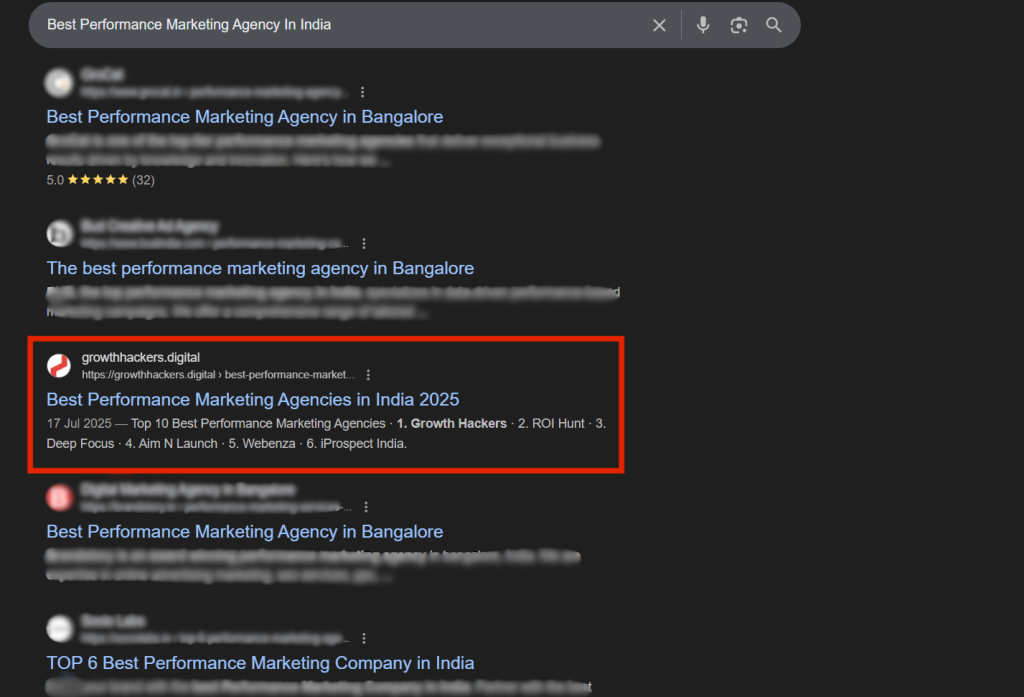
Real example: Growth Hackers ranks #1 for “Best Performance Marketing Agency in India” primarily due to topical authority – consistent, deep content on performance marketing creates clear subject expertise.
Strategy: Build content clusters around core topics. Go deep, not wide. Become the definitive resource for your niche.
Insight #2: SEO Shifted from Keywords to Intent
Search engines now prioritize content that genuinely addresses user questions over keyword density.
New focus: Intent-driven strategy that rewards relevance, clarity, and engagement.
This ties directly into AI search because AI systems are fundamentally intent-based, seeking the best answer to user questions rather than keyword-stuffed pages.
Insight #3: AI Max in Google Ads – Power with Caution
Google Ads’ AI Max leverages advanced automation for bidding, targeting, creatives, and placements. But even seasoned advertisers can lose control.
Common issue: Low-budget campaigns extend to broader search terms. Brand campaigns for “Growth Hackers” appear for irrelevant terms like “Digital” or “SEO.”


Solution: Use negative keywords aggressively. Add negatives using search term reports for ongoing efficiency.
Pro tip: To opt out, go to Campaigns → Settings → AI Max Panel → Opt out of all settings.
Insight #4: Fresh Updates and Third-Party Reviews Matter More
AI models treat recency as both a trust signal and competitive moat.
Recency advantage: Fresh updates within 3 months prove active maintenance. Consistent 3-month refresh cycles create sustained citation advantage.
Review platform presence: AI prioritizes third-party validation. Cross-platform presence on Clutch, G2, Capterra, and Trustpilot compounds trust effects.
Strategy: Maintain content freshness + build genuine review presence across platforms.
Insight #5: Amazon Ads – Reviews and Visibility as Twin Forces
On Amazon, reviews and visibility are everything. Reviews build trust; visibility gets you discovered.
Best-performing formats:
• SP Auto (Close Match)
• SP Manual – Branded + benefit-based keywords
• SB Video Ads – Strong engagement
• ASIN Targeting – High intent
Advanced tactics:
• Target complements + substitutes to capture comparison shoppers
• Target competitor ASINs with poor reviews for easy conversions
Truth: Paid ads work best for products with strong ratings and organic reach.
🛠️ Behind the Stack: Advanced AI Tools
AI Assistant Evolution: Claude Over ChatGPT
We’ve shifted more work from ChatGPT to Claude – here’s why:
ChatGPT evolution: GPT-4.5 set high standards for creativity and reliability. GPT-5 (August 2025) brought advanced reasoning but struggled with consistency.
Claude advantage: Delivers dependable, ethically aligned, nuanced interactions especially for long-form reasoning and complex analyses.
Use case distribution:
• Claude: Deep reasoning, structured analysis, sensitive work
• ChatGPT: Quick tasks, creative brainstorming, general queries
Google Ads Advisor – AI Campaign Assistant
Google’s Ads Advisor brings AI directly into campaign management, spotting issues and suggesting optimizations with reversible change history.
Our take: Decent assistant, not strategist. Handles repetitive checks and quick-wins, letting you focus on budget decisions and strategic direction.
Best practice: Use for speed, not judgment.
Gemini 3.0 – Google’s Multimodal AI
Launched November 2025, Gemini 3.0 processes text, images, video, and audio together while handling massive datasets.
Marketing implications:
• AI agents search for products on behalf of buyers
• Content needs precise, factual information AI can parse
• Create consistent content across channels – compressing weeks into hours
Status: Currently testing – detailed breakdown coming next month.
UGC Video Tools: Veo 3.1 vs HeyGen
Veo 3.1:
• Pros: Highly realistic with accurate lip-sync; simultaneous video/audio generation
• Cons: 8-second clips requiring stitching; inconsistent voice/body language
• Best for: Short UGC with editing, prioritizing realism
HeyGen:
• Pros: Longer videos (5-30 minutes); better audio control
• Cons: Less realistic than Veo 3.1
• Best for: Longer-form content prioritizing consistency
Recommendation: Choose based on length vs realism requirements.
📆 What’s Next
Episode 2 covered major platform shifts and AI tool evolution. The landscape is changing faster than ever from Meta’s creative-driven targeting to Google’s intent-based everything.
Key takeaway: Platforms are becoming more AI-driven. Success requires understanding how algorithms think, not just how humans behave.
Subscribe for monthly experiment updates, and let us know what you want us to test next.
